Barbed Wire Installation: Tools, Spacing & Tips
Key Highlights
Here are the key takeaways for your barbed wire fence installation:
- Proper planning is crucial; always check local regulations before starting your project.
- The correct barbed wire fence post spacing, typically 10 feet apart, ensures a stable wire fencing structure.
- Using concrete to set your corner post and end posts provides essential stability for the entire fence.
- Achieving the right wire tension is vital for the fence’s strength and effectiveness.
- Safety should be your top priority; always wear protective gear during the barbed wire installation.
- Regular maintenance checks at regular intervals will extend the life of your fence.
Installing a fence with barbed wire can seem like a tough job, but with the right tools, spacing, and guidance, it’s absolutely achievable.
Whether you’re protecting farmland, marking a property boundary, or improving security, barbed wire on fence lines offers a cost-effective and long-lasting solution. The key is to plan carefully, choose quality barbed wire fence materials, and follow best practices that ensure safety and durability from day one. With proper post spacing, secure tensioning, and attention to detail, you’ll end up with a fence that’s both strong and reliable, without unnecessary stress.
If you’re ready to take on your fencing project, or would rather leave it to the pros, Bravo Fence Company is here to help with expert support every step.
Let’s get started.
Barbed Wire Fence Materials: What You’ll Need
Before you begin the installation process, you must gather the right tools and barbed wire fence materials. What tools and materials do I need for barbed wire installation? Your primary needs will be rolls of barbed wire, barbed wire fence posts (either wood or steel), and a post hole digger. The number of strands you plan to install and their diameter will determine how many rolls of wire you purchase.
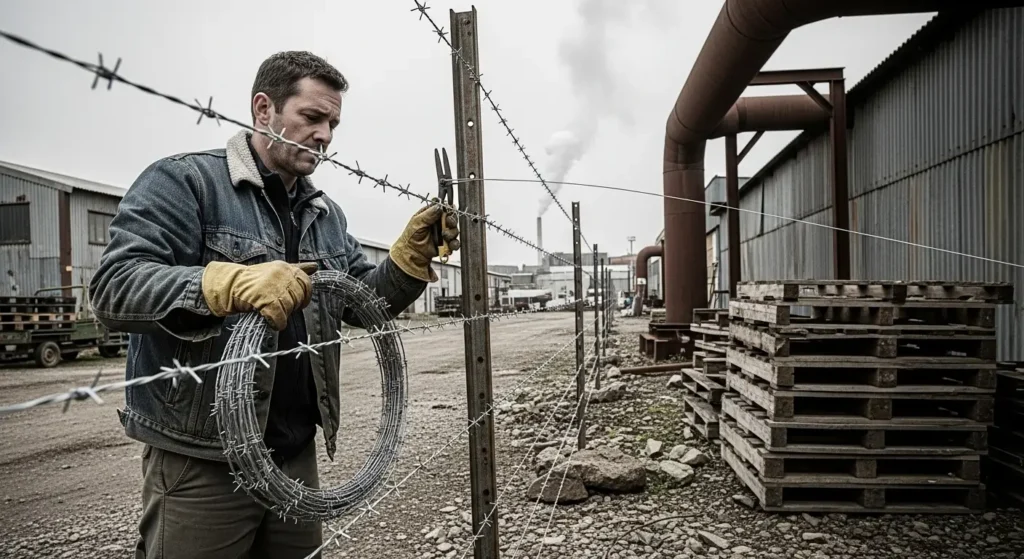
You will also need a post driver or sledgehammer to set the posts, fence staples, a hammer to attach the wire, and a measuring tape and level to ensure accuracy. Wire tensioners are essential for maintaining tautness. Most importantly, don’t forget safety gear like heavy-duty gloves and safety goggles to protect yourself from the sharp barbs throughout the project.
How Barbed Wire Installation Works?
The wire fence building process follows a logical sequence to ensure a strong and lasting result. What are the basic steps for installing a fence with barbed wire? It starts with careful planning, where you map out your fence line and confirm you follow all local rules.
After planning, you’ll move on to the physical work of setting the barbed wire fence posts that form the backbone of your fencing. The final major phase involves carefully stringing and tensioning the barbed wire on fence lines. The following sections will provide a detailed breakdown of each step.

Step-by-Step Guide: How to Install a Barbed Wire Fence
Now, let’s get into the specifics of the installation process. This guide breaks down how to build your residential barbed wire fence into clear, manageable steps. Following these instructions carefully will help you create a secure and durable barrier for your property.
Each stage is critical, from planning the post spacing for your wire fence building to securing the horizontal line wires. We will begin with the most essential part of any project: creating a solid plan, which includes marking the fence line and setting up your corner post locations.
Step 1: Planning Your Fence Line and Post Spacing
The first step in any successful fencing project is thorough planning. You must research local regulations regarding fence height and materials to avoid any legal issues down the line. Accurately surveying your property boundaries is also crucial to prevent disputes with neighbors.
How far apart should barb wire fence posts be placed when installing barbed wire? A common mistake to avoid is improper post spacing. Line posts should be placed at regular intervals for a sturdy fence, typically around 10 feet apart. Start by marking the location for your starting post and corner posts, then use stakes and string to create a straight guide for the rest of your fence line.
Before you dig, remember these key planning points:
- Call 811 as directed by the Federal Communications Commission (FCC) to locate underground utilities safely
- Familiarize yourself with all local regulations for fencing.
- Clearly mark your property boundaries to ensure the residential barbed wire fence is installed legally.
- Plan your post spacing carefully for maximum stability.
Step 2: Installing Fence Posts and Safety Preparations
With your fence line marked, it’s time to install the posts. This is a physically demanding but essential step that creates the foundation for your fence. Use a post hole digger to create holes for your corner post and end post that are at least 3 feet deep. These anchor posts should be set in concrete to provide maximum stability and prevent shifting.
You can use wood or steel barbed wire fence posts for the line posts between the anchors. Ensure all posts are plumb and level as you install them. Remember, your safety is paramount. How do I safely handle barbed wire on fence projects? Always adhere to critical safety measures:
- Wear thick gloves and safety goggles at all times when handling materials.
- Keep the area clear of debris and obstacles to prevent trips and falls.
Step 3: Attaching and Tensioning Barbed Wire
Now you can begin stringing the barbed wire. Start at the bottom strand and attach the end of the wire securely to your first post. Unroll the wire along the fence line, making sure it stays taut and doesn’t develop kinks. To achieve proper tension, use a fence stretcher or tensioning tool to pull the wire tight before securing it to the next post.
What is the best way to tension barbed wire for a strong fence with barbed wire? Consistent tension is key. A securely tensioned wire prevents sagging and makes the fence a more effective barrier. Depending on your security needs, you can choose between different types of barbed wire fence materials:
| Wire Type | Characteristics | Best For |
| Regular Steel | More flexible and easier to handle. | General-purpose fencing and smaller properties. |
| High-Tensile Steel | Stronger, more durable, requires more tension. | Large areas, livestock containment, and high-security needs. |
Note: For agricultural or livestock fencing, consult the U.S. Department of Agriculture (USDA) fencing guidelines.
Step 4: Securing Wire to Wooden and Metal Posts
The final step is to secure the barbed wire on fence posts along the line. How do I attach barbed wire to wooden or metal fence posts? The method depends on your post material. For wooden posts, you’ll use U-shaped staples and a hammer.
Drive the staples over the wire, but don’t hammer them in so tightly that they pinch or damage the wire. The wire should be able to move slightly within the staple. For metal T-posts, you’ll use specially designed clips. Wrap the clip around the post and wire, then twist it tight to hold the strand in place.
- For wooden posts: Use fence staples, leaving a small gap for wire movement.
- For metal posts: Secure the wire using clips designed for the post type.
Conclusion
A successful barbed wire installation involves planning, precision, and putting safety first. Each step plays a vital role in creating a strong, lasting barrier, from selecting the right materials to spacing your posts correctly and applying proper tension. Whether you’re securing livestock, protecting property, or marking boundaries, this fencing can be practical and durable when done right.
Understanding the process and using the right tools will save you time, money, and frustration in the long run. But if the project feels overwhelming or you’d simply prefer expert hands to handle the work, you don’t have to go it alone. At Bravo Fence Company, we bring years of experience and a commitment to quality craftsmanship to every job.
Call us today at (770) 966-9970 or fill out our online form to schedule your free consultation. We’ll help you get your fence up quickly, safely, and built to last.
Frequently Asked Questions
How far apart should fence posts be for barbed wire installation?
Fence posts for a barbed wire installation should be spaced at regular intervals. A standard distance is about 10 feet apart. Consistent post spacing along the entire fence line is crucial for maintaining wire tension and ensuring the fence’s structural integrity.
Can I install barbed wire myself, or should I hire a professional?
Installing barbed wire can be a DIY project if you have the right tools and follow safety measures carefully. However, the installation process can be physically demanding and potentially hazardous. If you are inexperienced or concerned about safety, hirie a professional.
What is the best way to tension barbed wire for strength?
The best way is to use a fence stretcher. This allows you to pull the strands of barbed wire taut between posts before securing them. Even tension is critical for the fence’s overall strength, durability, and effectiveness.
What maintenance does a barbed wire fence require?
It requires regular maintenance to ensure its longevity. Inspect the fence regularly, especially after storms for signs of wear like loose wires or damaged posts. You should also trim away any overgrown vegetation that could weaken the structure.
What tools are essential for installing barbed wire effectively?
Key tools include a post hole digger, a sledgehammer or post driver, a hammer, and wire cutters. You’ll also need fence staples or clips to attach the wire. Most importantly, safety gear like heavy-duty gloves and goggles is absolutely essential.
Tags: Complete Guide to Barbed Wire, Explore Helpful Resources on Barbed Wire Fence Drawing, Inspiration and Tips on Barb Wire Fencing, Top Ideas and Insights About Barbed Wire Fence Post, Top Ideas and Insights About Barbed Wire Fencing Design, Top Ideas and Insights About Barbed Wire Home Depot, Top Ideas and Insights About Simple Barbed Wire Fencing Design