

Best Fences for Dogs: How to Choose the Right Fence for Your Yard
For dog owners, a fence has a bigger job than simply marking a property line. It needs to give your dog room to run while keeping them safely contained, whether you have a small puppy, a 70-pound jumper, or one of those dogs that love to dig.
So, what are the best fences for dogs?
The answer depends on your dog, your yard, and how much privacy, maintenance, and visibility you want. A six-foot wood fence may be perfect for a large, energetic dog, while an aluminum fence with closely spaced pickets can make more sense for a smaller breed.
At Bravo Fence, we install residential fencing across North Georgia and help homeowners compare fence options for dogs based on how their families actually use their yards.
What Makes a Good Dog Fence?
A good dog fence needs to solve for three basic things: height, spacing, and durability.
Start with your dog’s size and behavior. A shorter fence may safely contain a small dog that isn’t much of a jumper, while larger or more athletic breeds may require greater fence height. Dogs that chase squirrels, react to passing pedestrians, or simply like to see what’s happening outside the yard may also benefit from a solid visual barrier.
Spacing matters just as much. A small dog may be able to squeeze between widely spaced pickets that would easily contain a larger breed.
Finally, consider how your dog behaves around the fence itself. Jumpers, climbers, and diggers can turn a perfectly good residential fence into an escape route if those behaviors aren’t considered before installation.
Wood Privacy Fences for Dogs

A wood fence remains one of the most versatile dog fencing options.
A solid privacy fence creates a strong physical fence between your dog and whatever is happening outside the yard. That can help block outside stimuli such as neighboring dogs, pedestrians, and passing traffic.
For dogs that become excited by everything they see, that visual barrier can be a major advantage.
Wooden fences are also highly customizable. Homeowners can choose the appropriate fence height, board spacing, gates, and styles to match both the dog and the property. A tall wooden fence can provide substantial privacy for the family while giving the dog a secure backyard.
Wood does require maintenance, however. Georgia humidity, rain, and sun mean wood fencing should be properly maintained to help prevent deterioration over time.
Vinyl Fences for Dogs

For homeowners who want privacy with less routine maintenance, vinyl fencing is another strong choice.
Solid vinyl fences offer many of the same dog-friendly advantages as wood. A vinyl privacy fence blocks sightlines and provides a continuous barrier without gaps between traditional pickets.
That makes vinyl fencing worth considering for dogs that bark at outside activity or need a secure area without easy visual distractions.
A vinyl fence also doesn’t require staining or painting. For homeowners who want a clean backyard enclosure without the maintenance associated with wood, a vinyl privacy fence can provide a practical long-term solution.
Aluminum Fences for Dogs

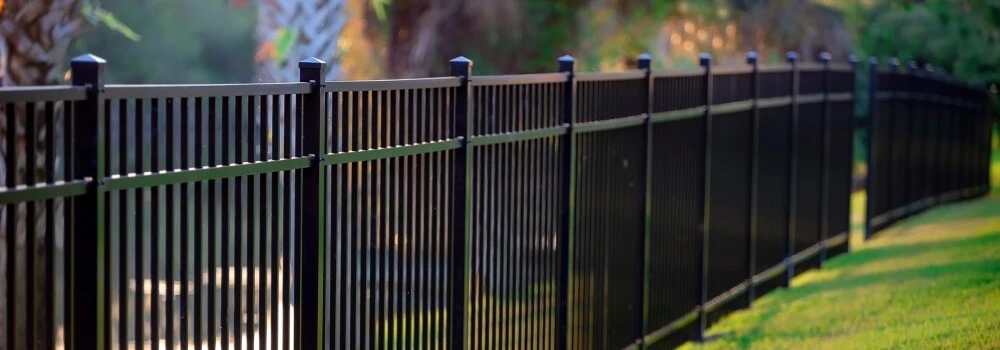
An aluminum fence can be an excellent choice when you want security without closing off the view.
Aluminum is especially popular around landscaped yards and pools because its open design provides containment while allowing you to see through the fence. Bravo Fence also offers aluminum options with “puppy pickets,” which use closer spacing toward the bottom of the fence to help prevent small dogs from slipping through.
For the right dog, these metal fences provide an attractive, low-maintenance alternative to solid privacy fencing.
The dog’s size still matters. When considering aluminum fencing, make sure the spacing between pickets is appropriate for your pet and choose a fence height suited to its jumping ability.
Is a Chain Link Fence Good for Dogs?

Yes. A chain link fence can provide durable and affordable dog fencing, particularly when visibility isn’t a concern.
Chain link fences work well for larger yards because they provide a secure perimeter without requiring solid panels across the entire property. The wire mesh creates a strong barrier while allowing homeowners to see into and out of the fenced area.
For some dogs, however, visibility can be a drawback. If your dog reacts strongly to people, animals, or cars outside the yard, the open wire mesh of chain-link fencing won’t provide the same visual separation as a wood or vinyl privacy fence.
A determined climber may also require a different fence choice.
What About Picket Fences?
A picket fence can work well for certain dogs, particularly smaller or calmer pets, but spacing is critical.
Traditional picket fences may leave openings large enough for small dogs to squeeze through. Before choosing this style, make sure the gap between each picket works for your dog’s size.
A picket fence may also be too short for an athletic jumper. These are cases where appearance should be balanced against the actual containment needs of your pet.
What About Dogs That Dig?

Dogs that love to dig present a different challenge because increasing fence height doesn’t solve the problem.
For persistent diggers, the bottom of the fence may need additional planning. Depending on the property and fence design, installers can discuss ways to reduce opportunities for a dog to work underneath the barrier.
Some homeowners consider adding wire mesh near the base or using other physical deterrents. The right solution should account for the fence material, drainage, and terrain rather than simply placing something along the ground without considering how water moves through the yard.
A true dog-proof fence needs to address the dog’s actual escape habits.
Physical Fences vs. Invisible Dog Fences
Some homeowners researching dog fence ideas also consider invisible dog fences.
An invisible system may preserve an open view, but it doesn’t create a physical barrier. Other animals can still enter the yard, and the system relies on the dog responding appropriately to its boundary.
A traditional physical fence, by comparison, creates a visible boundary between your dog and the surrounding area.
For homeowners who want privacy, security, and pet containment from the same investment, physical dog fences such as wood, vinyl, aluminum, or chain link provide benefits beyond keeping the dog in the yard.
What About Dog Fence Kits?
Homeowners may also encounter dog fence kits and other DIY kits when researching dog fencing ideas.
A dog fence kit can appear straightforward, but installation conditions vary considerably from yard to yard. Slopes, Georgia red clay, gates, drainage, trees, and property lines can all complicate a seemingly simple project.
The same applies to general-purpose fence kits and DIY kits. Proper post placement and structural support matter if you want the fence to remain straight and secure after years of Georgia rain, heat, and soil movement.
Professional installation can be especially valuable when the fence’s primary job is keeping a pet safely contained.
Choosing the Best Fence for Your Dog
There isn’t one universal winner among the best fences for dogs.
A large dog that jumps and reacts to neighboring animals may be best served by a tall privacy fence. A smaller dog may do well behind appropriately spaced aluminum fencing. A chain-link fence can make sense for a large yard, while a vinyl fence may appeal to a homeowner who wants privacy without regular staining.
The right fence choice should consider:
- Your dog’s size and breed
- Jumping and climbing behavior
- Digging habits
- Desired fence height
- Picket or mesh spacing
- Need for a visual barrier
- Yard size and terrain
- Maintenance preferences
- HOA requirements
- Budget
You can also browse Bravo Fence’s fence gallery to compare wood, aluminum, steel, PVC, chain link, and gate options installed around the Atlanta area.
Build a Backyard Both You and Your Dog Can Enjoy
The best dog fence should give you peace of mind without making your backyard feel like a kennel.
Whether that means a traditional wood fence, low-maintenance vinyl fences, an open aluminum fence, durable chain link fencing, or another custom solution, the goal is the same: create a yard where your dog can safely spend time outside, and your family can enjoy the space too.
Bravo Fence has served Metro Atlanta and North Georgia since 2004, with residential options including wood, aluminum, steel, chain link, and vinyl fencing.
If you’re comparing the best fences for dogs, talk to Bravo Fence about your dog, your yard, and what you need from the space. We’ll help you find a fence built for all three.